Solingen, Germany, November 15th 2025, NBTHK-EB Meeting
The meeting was very well attended by 29 members. The theme of the meeting was Bring and Tell. As always, we were able to view an exclusive selection of blades.
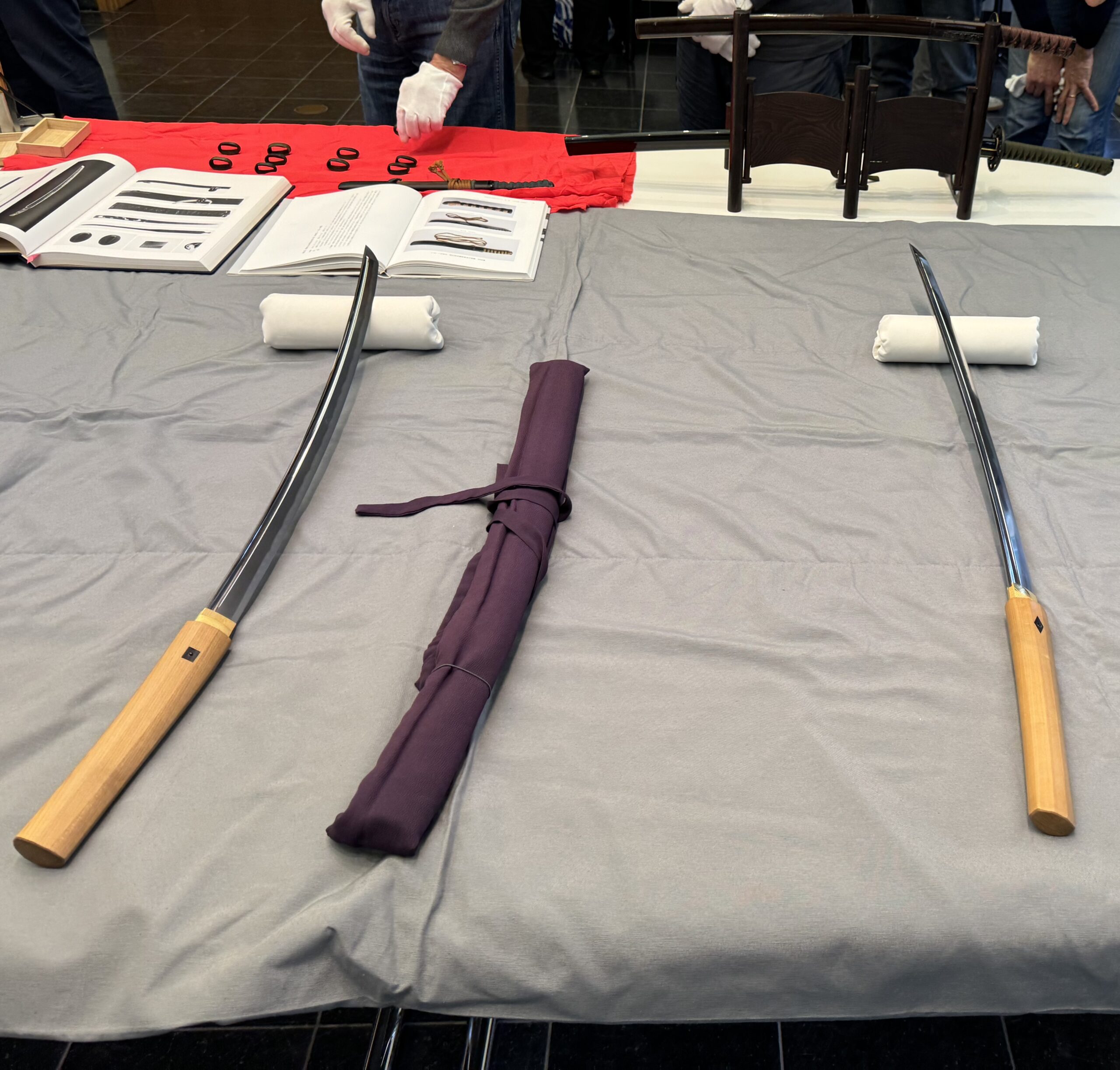
Kantei #1
- Katana by Hizen Tadakuni
- Wakizashi by Kotetsu
- Katana by Hizen Motoyuki
- Katana by Kashu Sanekage (formerly attributed to Norishige), juyo-token
Kantei #2
- Katana by Omiya Morikage, juyo-token
- Wakizashi, mumei, Shinto – needs further study
- Tanto by Bishu Osafune Norimitsu, dated 1469, in moroha zukuri form
- Katana by Bishu Osafune Norimitsu, dated 1478
- Tanto by Katsumura Norikatsu, Shin-Shinto
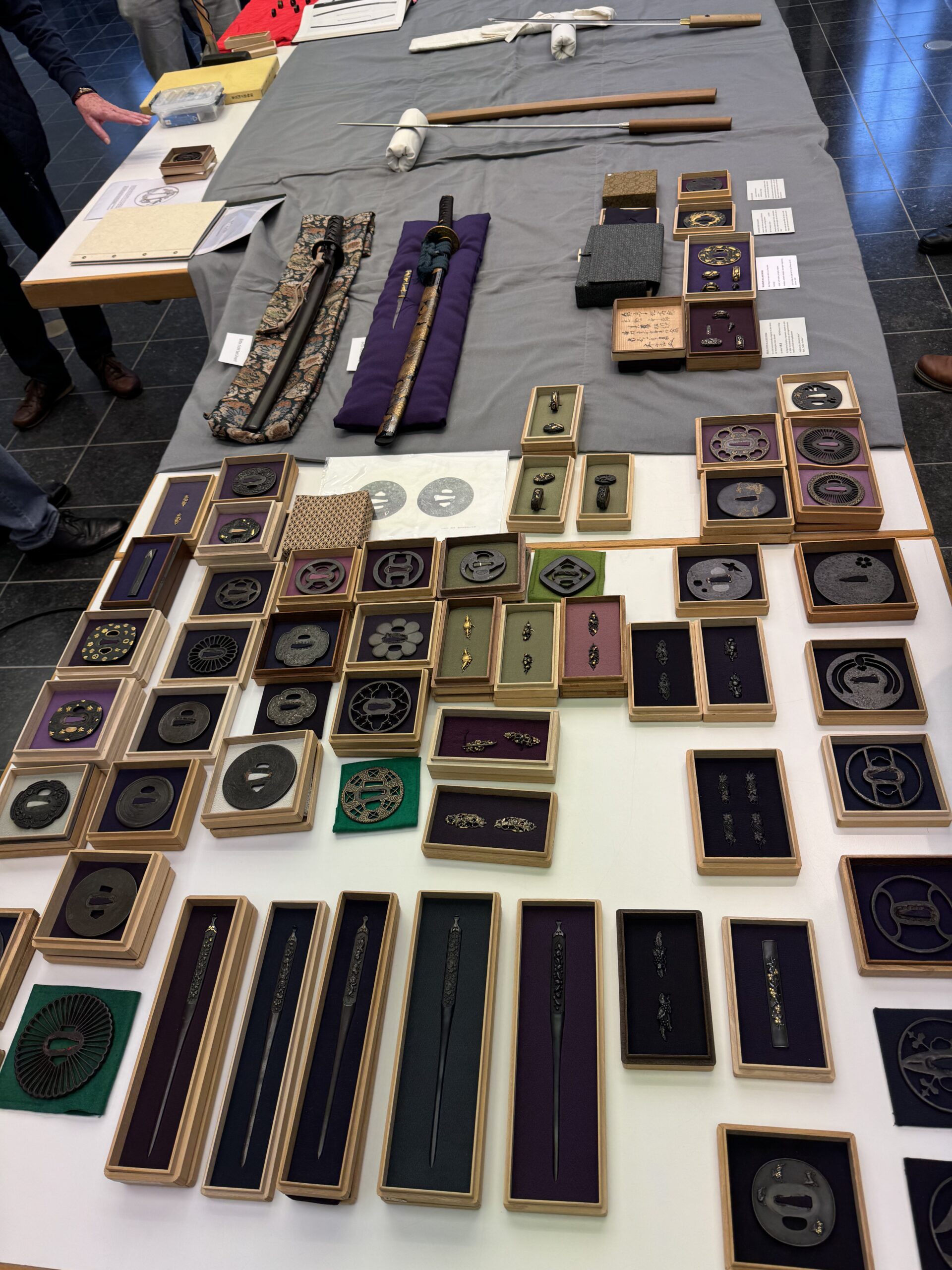
The subject of the meeting was tosogu from the Kamakura to Momoyama periods. The topic was started by structuring and explaining the styles and schools from this period. A particularly valuable aspect of the lecture was that the content was always conveyed in connection with the exhibited pieces. The breadth, quality, taste and sheer quantity of objects we were able to view at this meeting are rarely seen! Here are some individual highlights:
- 3rd generation Goto (Joshin) Kogai with the Mon motif, shakudo;
- Yamagane tsuba from the Sasano-sensei collection;
- Ko-kinko kodogu set with sea motifs, shakudo;
- Ko-Mino kodogu set with the motif of autumn grasses and game, silver;
- Ko-kinko kogai with the squirrel and grape motif, shibuichi.
In addition, there were several excellent and typical examples of Kagamishi tsuba, ko-kinko tsuba, Ezo menuki, earlier Goto works and much, much more. A feast for the eyes!
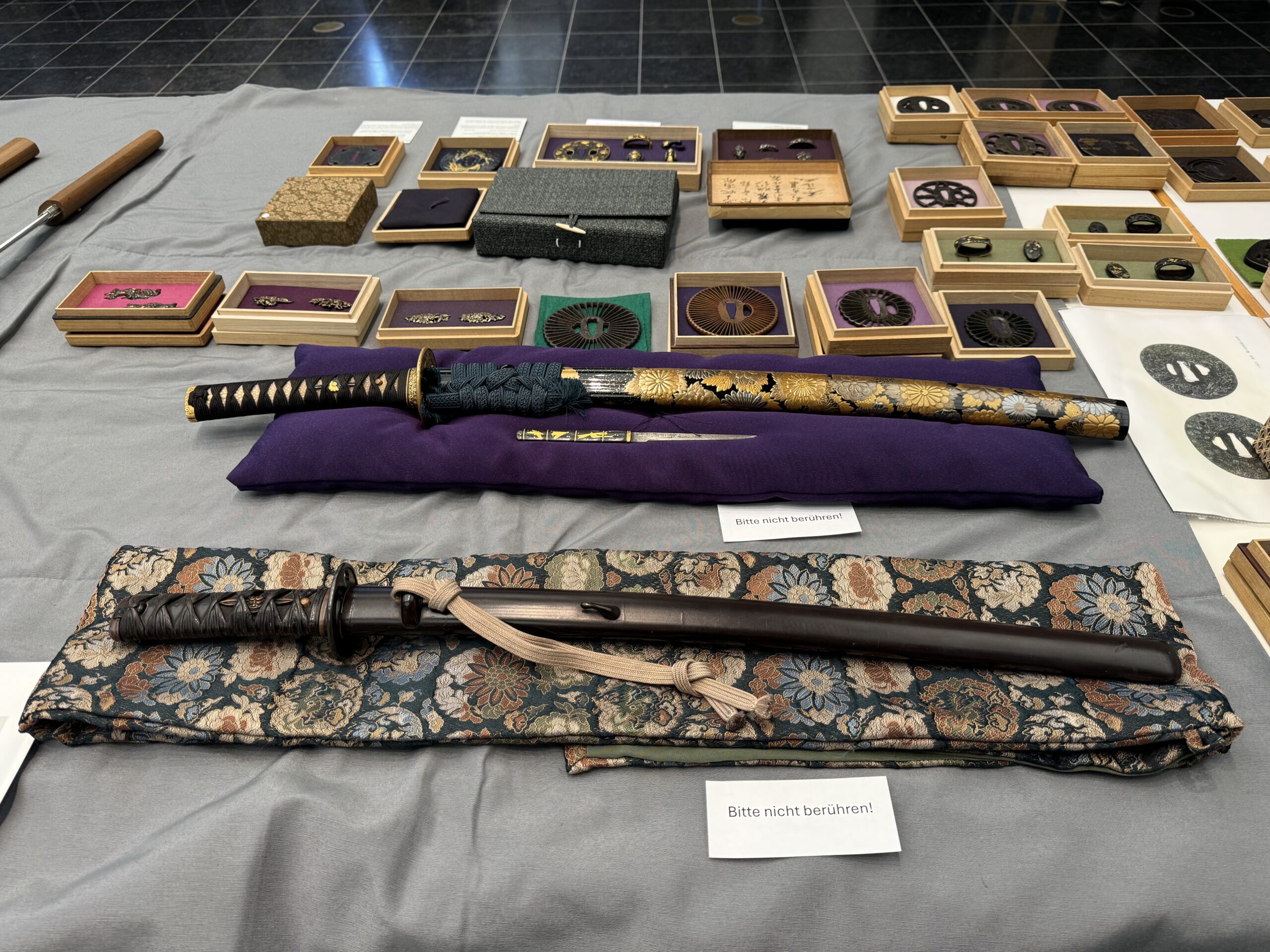
Two koshirae were particularly exciting and rare: Muromachi jidai wakizashi koshirae and a modern utsushimono of the koshirae of the national treasure Nikko Sukezane. The parts of the koshirae are antique, but the assemblage is modern.